

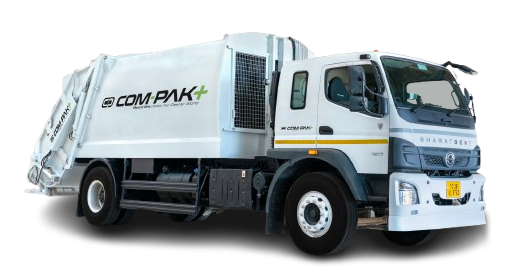
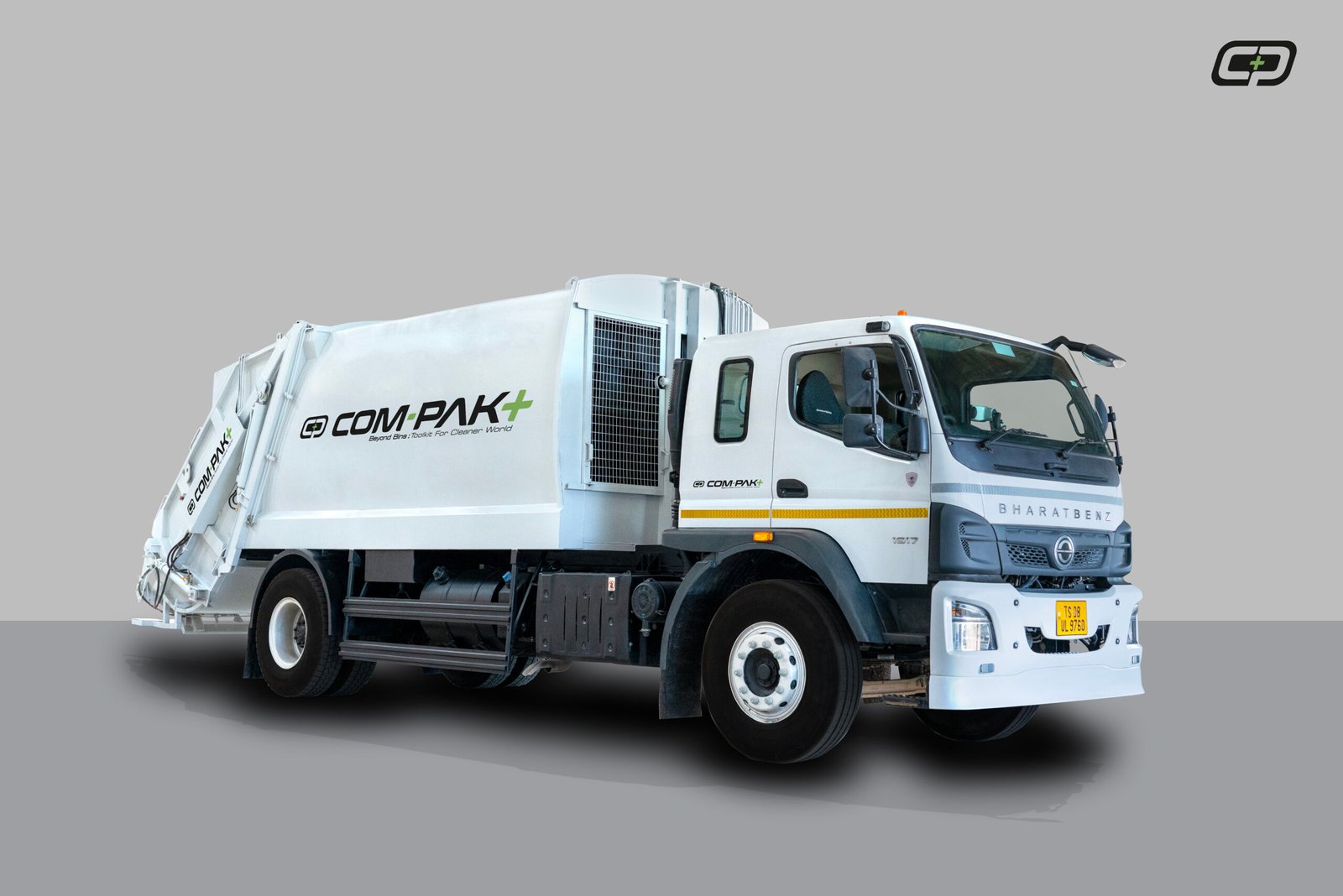
About COM-PAK+
We use advanced manufacturing techniques to produce our waste collection compacting trucks. High tensile steel is used in the body shell to increase strength without the need for additional reinforcement, which also has the added bonus of reduced weight, which provides a high payload capacity both in weight and volume.Why Choose Us? Pack and sweep functions are designed with Hydraulic integrated circuits with options of the manual
Hydraulics
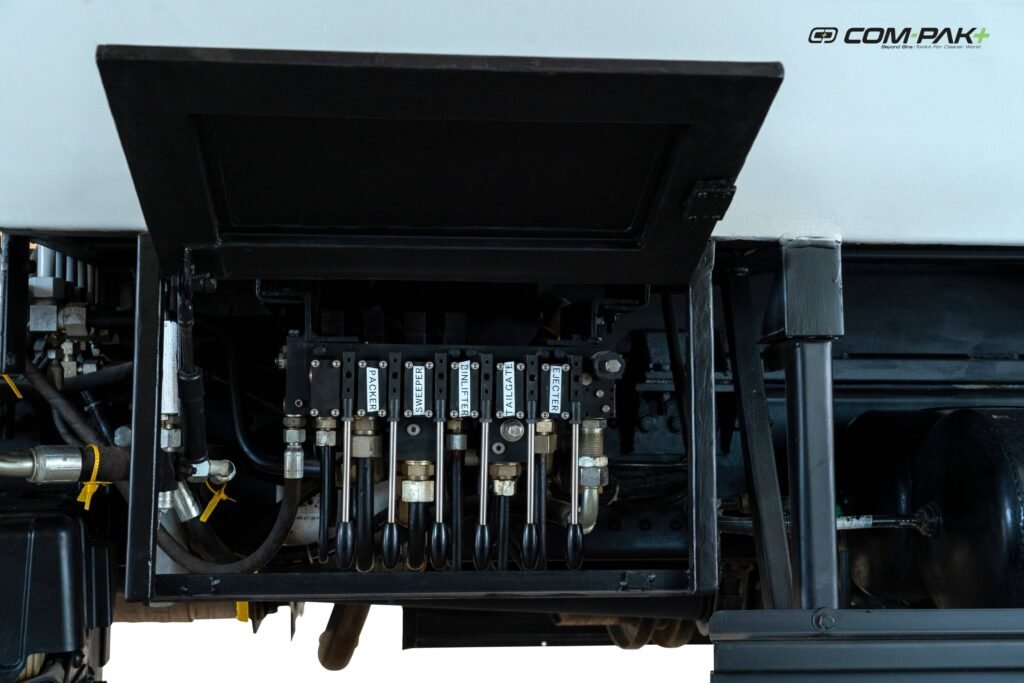
- Full Hydraulic circuit is designed to withstand 400 bar as against required 250 bar working pressure
- Main Control Valve and Pump is sourced from Hawe, Germany to achieve 400 bar pressure. A modern, compact pump that meets market’s high demand on flow performance, pressure & efficiency
- Each section of the control valve is designed for different flow to achieve proper cycle time for every individual operation
Compact and lightweight design - Highest energy efficiency thanks to low Spool and low-energy solutions
- Extensive modular system with many variants and combination options
Pumps & PTOs
Our pumps and PTO’s are sourced from leading manufacturer’s such as Sunfab in Sweden, Linde in Germany, Bezares in Spain with required modifications to suit our explicit needs for our operations and is made of lightweight metal casing that is corrosion free which is designed to give smooth operation over the entire speed range. A modern, compact single fixed piston pump (eliminating double pump design) renowned for its reliability that meets market’s high demand on flow performance, pressure, efficiency and long life.
Cylinders
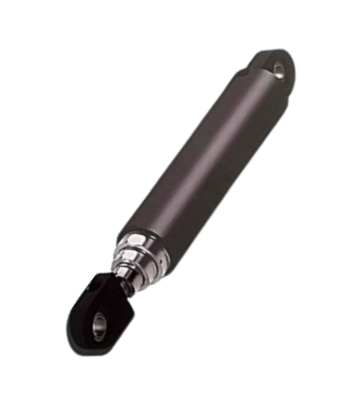
Multi Stage oil filters to keep the oil clean at all levels. Consists clogging pressure switch to notify operator through HMI in case of any clogged filters. All the hoses and fittings and other hydraulics related parts are sourced from leading manufacturers such as Hawe, Parker, Hyloc, Walvoil, Linde, Sunfab, Rexroth, Canara Hydraulics, Polyhose, Argo-Hytos, Hydroline, Hydac, Atos, Polyhydron, Rexroth, Hydrotherm etc.
Electricals and Electronics
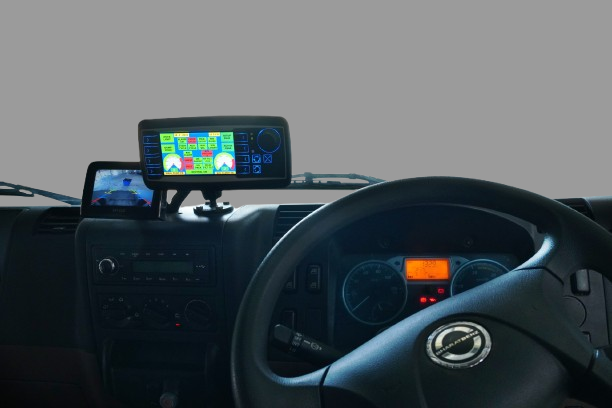
Programming is carried out by our engineers in-house to achieve best results. Most of the operations can be monitored on HMI where provided, which has 4.3” TFT colour graphic LCD with LED backlight and is mounted in the front cabin for certain models. This is also analogue sensitive comes with 8 function keys, 2 CAN interface & 1 RS232 interface and is 5G vibration proof Some of our operating switches are keypad type and comes with RGB Backlit with easily selectable operations display and is water and weather proof which is housed inside a special housing that is operated through CAN BUS
Container Body
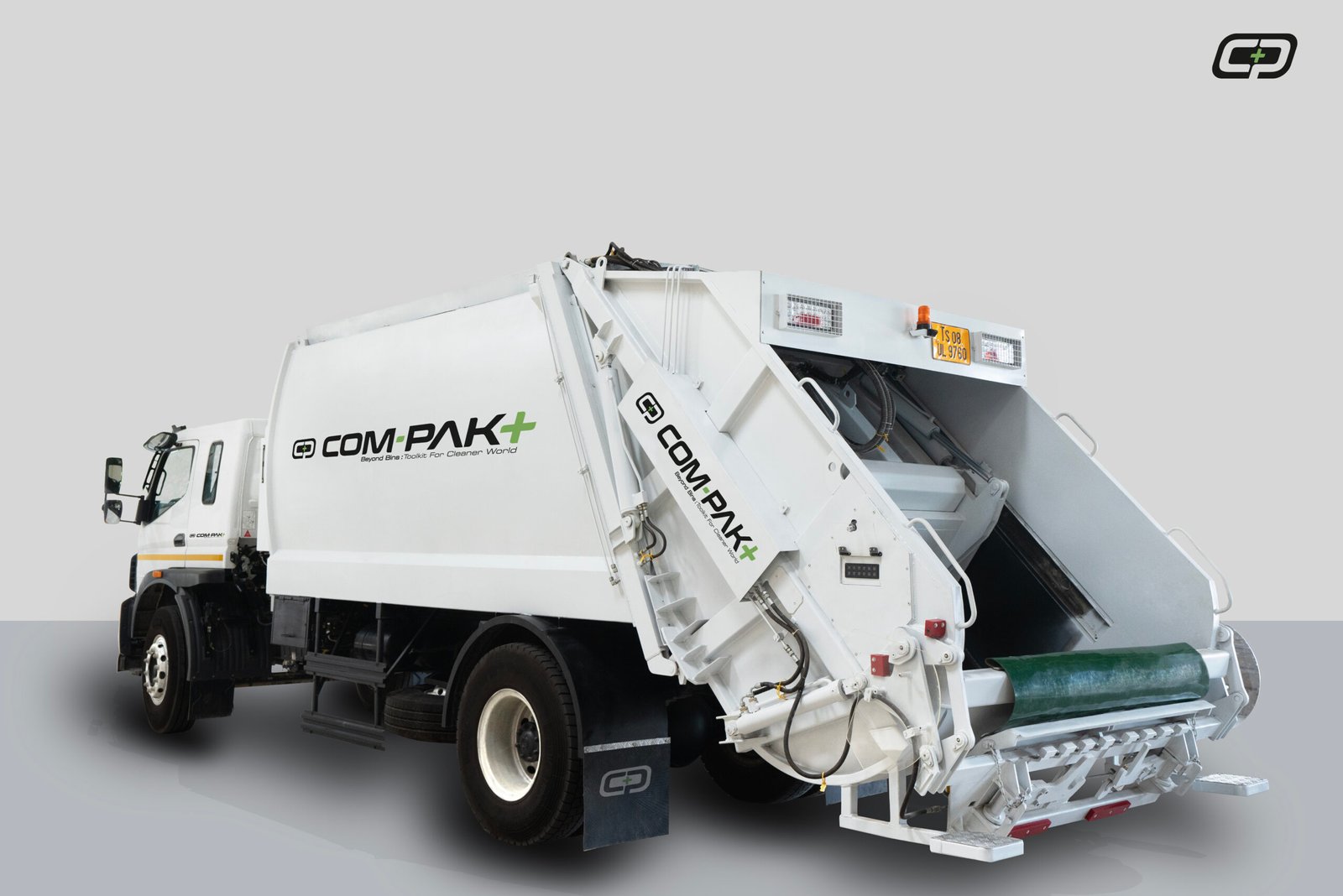
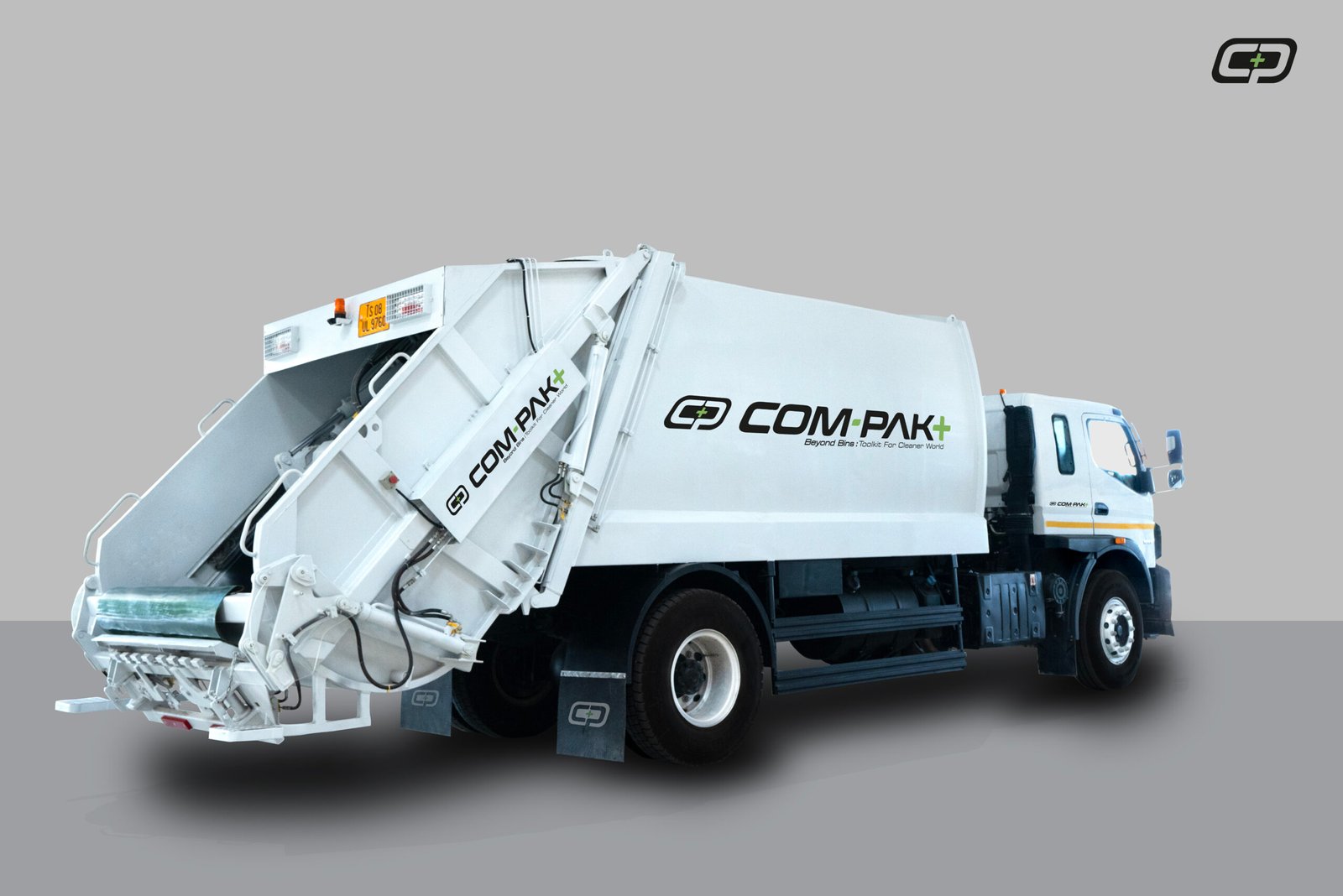
- Robust design, made from high tensile steel ST 52/IS 2062 350 grade, “one piece” rolled side sheets reinforced by front and rear stiffeners, to withstand continuous operation at maximum imposed loads
- Heavy duty Ertalon self lubricated guides all through to allow the barrier to move smoothly along the rails
- Hopper floor made from HARDOX 450 steel to prevent the hopper plate from wear and tear
- Self locking/unlocking tailgate
- High quality reinforced rubber sheet fitted at the end of the sweeper to keep the hopper clean after each compaction cycle
- Fully automated bin lifter with tri-locking/clamping arrangement for safety purposes
Special/Safety Features
Wherever necessary, Pressure Transducers are used as required to ensure automatic notification of any clogged filters directly on to HMI With all the above carefully designed and sourced products, the optimum working cycle time were made achievable. An example of the same on our 14 CuM rear loader are as below, Bin lifting complete cycle – 8 seconds Full cycle of sweeping and packing – 15 seconds Tailgate lifting and closing – 20 seconds Ejection – 40 seconds